
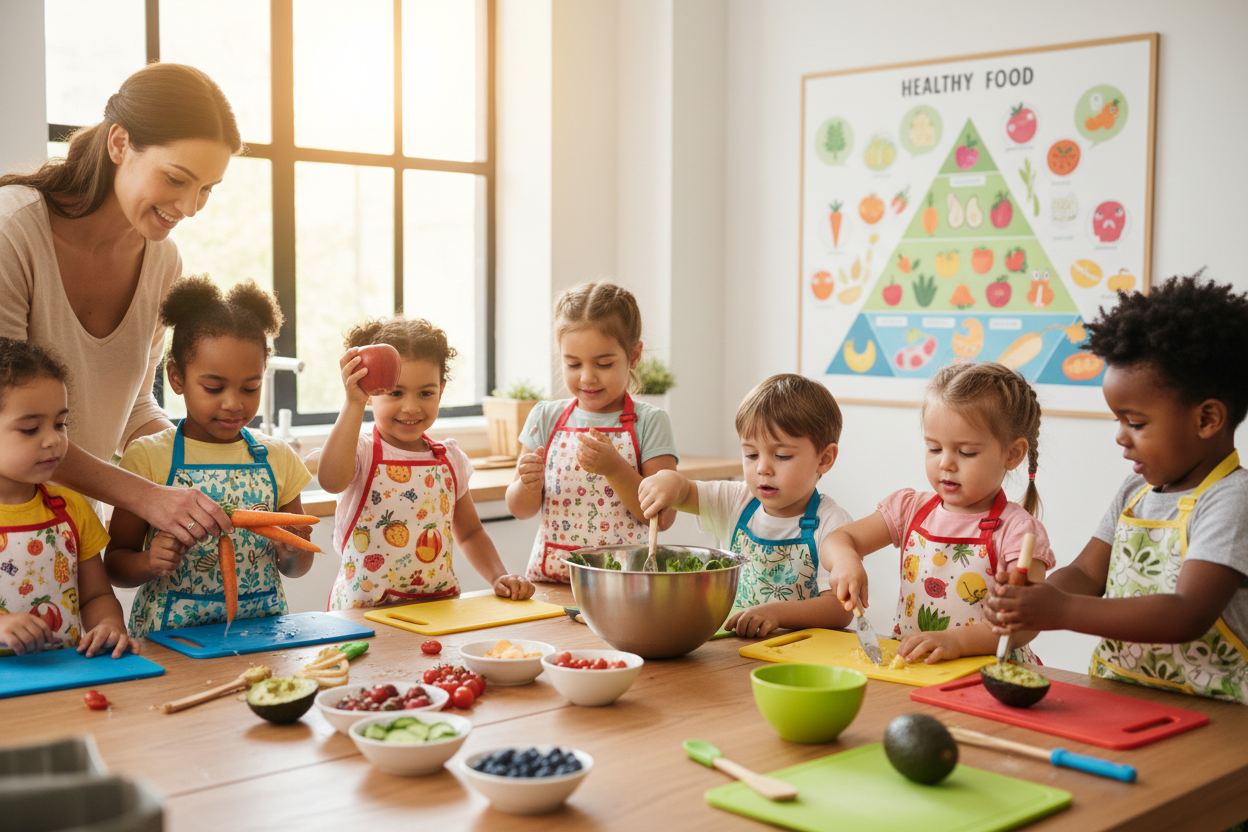
The family kitchen is not just a place for recipes: it is also the first school of health, pleasure, and discovery. From a very young age, your child learns, by cooking with you, hygiene practices, the basics of healthy eating, and the joy of listening to their body's signals.
Combining cooking and health education gives your child tools to grow up in confidence… and balance.
Home cooking, a learning ground for health.
Preparing a meal together naturally teaches good habits: washing hands, cleaning vegetables, tasting everything… Your child learns by observing and participating.
Home cooking allows for better control over food quality, greater variety in recipes, and makes homemade a pleasurable habit, far removed from ultra-processed products.
-
Hygiene: Wash hands before cooking, rinse fruits and vegetables, clean the work surface together.
-
Food diversity: Tasting new foods, varying the colours on the plate, discovering different flavours.
-
Healthy eating: How to compose a balanced plate, how to measure sugar, salt, fats…
-
Shared pleasure: Doing things together, congratulating each other, taking the time to savor.
Prevention is better than cure: good habits to pass on.
Health education also means learning to make informed choices. Read labels, choose fresh over ready-made products, and limit sugary drinks and ultra-processed snacks.
Explain to your child why certain choices are better for their growth or energy, without demonizing or forbidding them. Prevention is above all about the joy of discovery, homemade food, and curiosity about healthy eating.
- Choosing food together at the market or store.
- Read a label and discuss the sugar or ingredients.
- Create a “rainbow plate” to vary the intake.
- Prepare a homemade snack (fresh fruit, compote, simple cake…)
Encourage autonomy and listening to the body.
Learning to listen to your hunger, appetite, and satiety cues is already a step towards good health. Encourage your child to say when they are hungry, when they feel full, or when they want to try a new food.
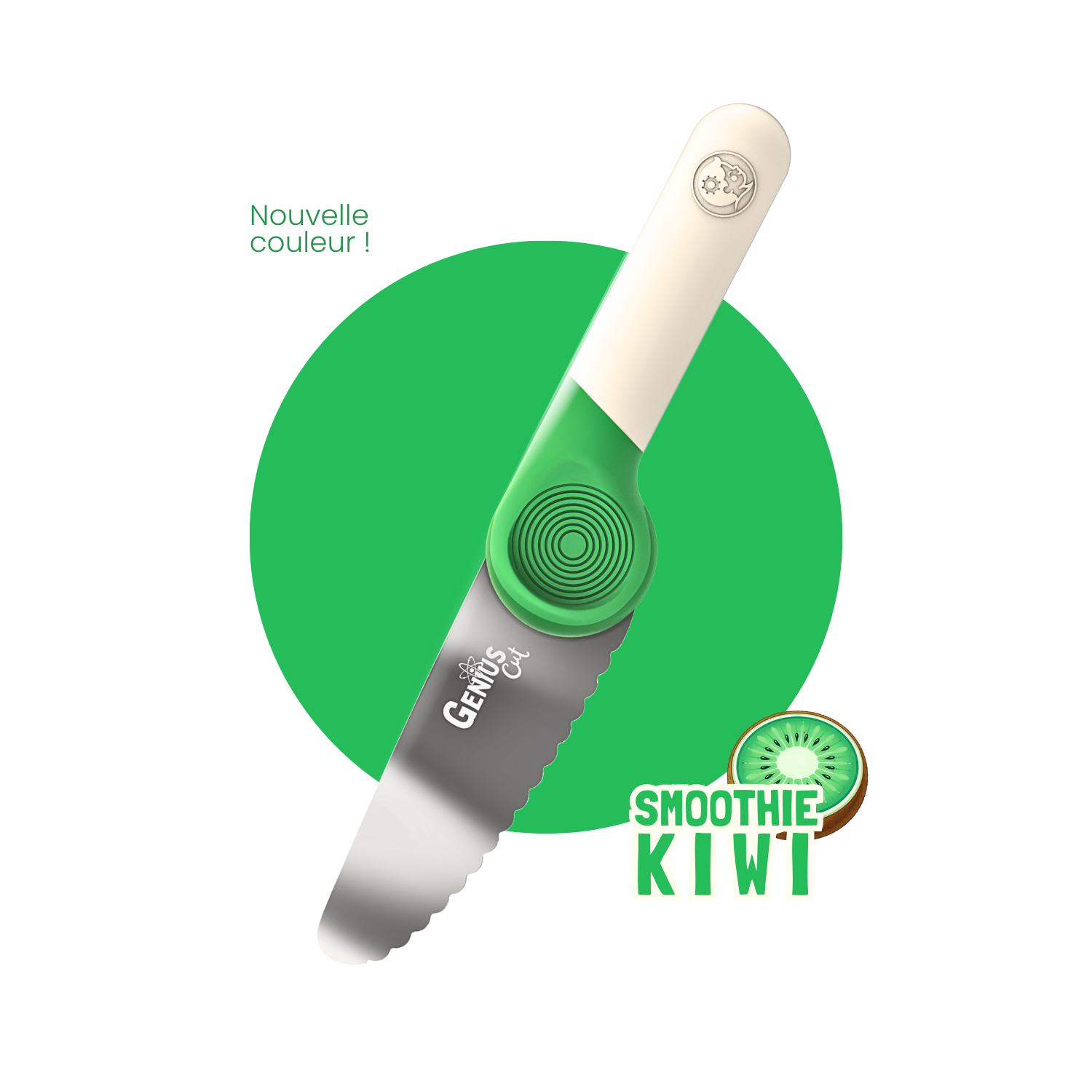
Let him serve himself (with a suitable tool like the Genius Cut® ), choose the portion size, express his tastes.
- Ask “Are you still hungry?” instead of insisting they finish their plate.
- Value listening to sensations (“Don’t you like this taste? Do you want to try again later?”).
- Encourage them to try, without forcing them or dramatizing their refusal.
Practical activities for health education in the kitchen.
-
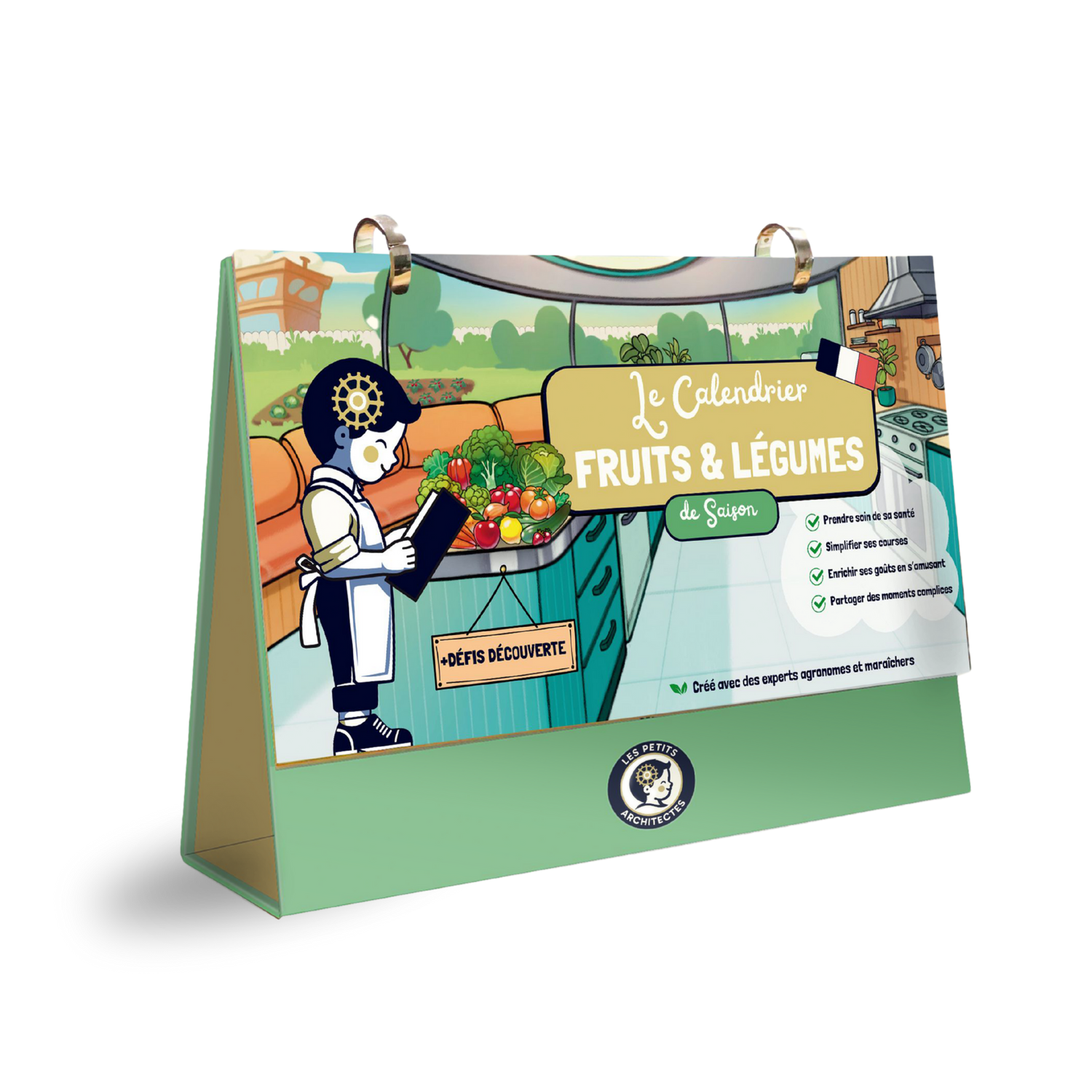
Market game: Go shopping together, discuss the choice of fruits, vegetables, grains, proteins. Talk about their origin, their season.
-
Balanced plate workshop: Together, compose a plate with at least three colors, discuss textures and flavors.
-
Sensory tasting: Guess a food item blindfolded, using touch, smell, and taste. Encourages curiosity and acceptance.
-
Prepare a homemade snack (cut fruit, simple cake…) to combine pleasure, balance, and the pride of having made it yourself.
Psychological tip: Make cooking a moment without stakes or pressure, where mistakes and refusals are accepted.
The more free and listened to a child feels, the more confidence they will have to explore, learn, and develop a positive relationship with food and health.
Conclusion: health, pleasure and autonomy from a very young age.
Combining cooking and health education opens the door to pleasure, discovery, and confidence. By involving your child, you help them develop good habits… that will last a lifetime. Eating well also means listening to your body, savoring food, sharing, and having fun as a family.
To support these learnings, discover our educational tools (Genius Cut®, Archi Autonomie Kit…) and other resources on Les Petits Architectes.





0 comments