
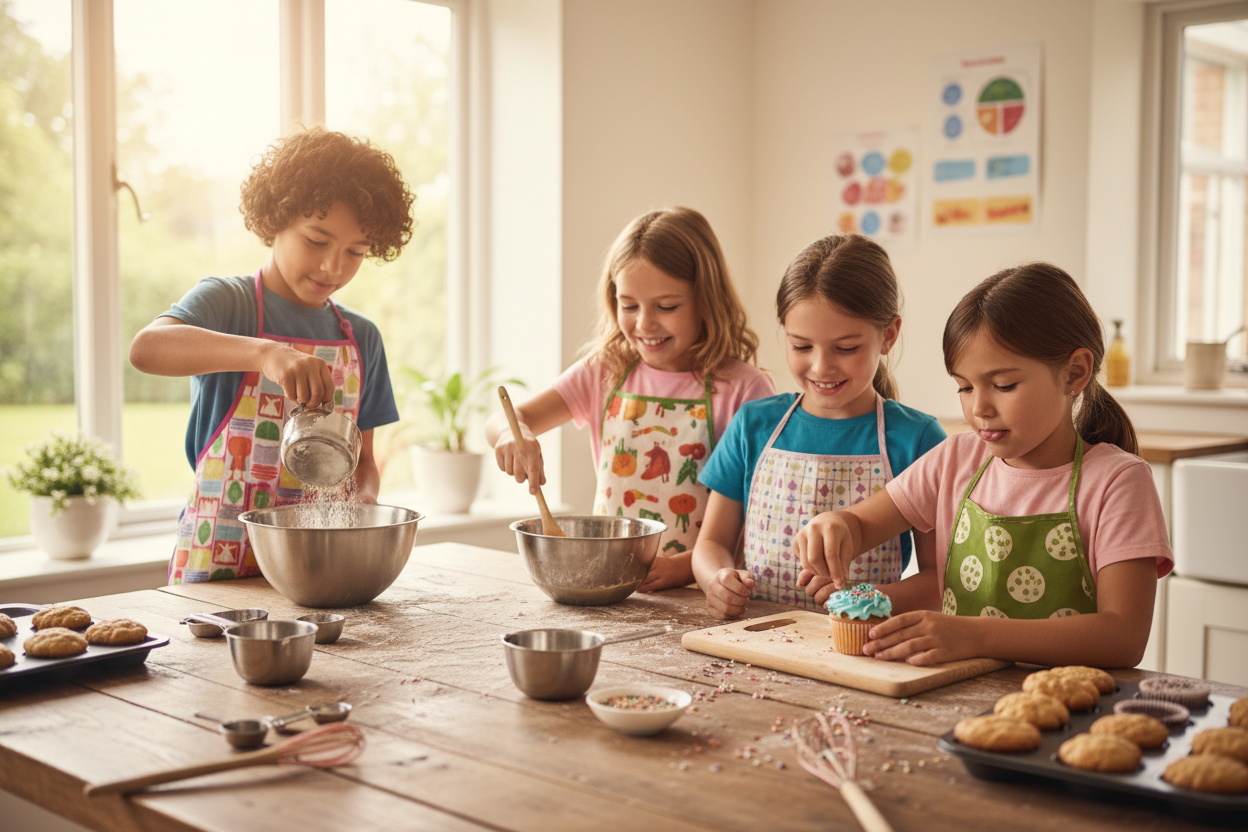
In the kitchen, children learn much more than just recipes: they practice waiting, concentrating, managing their emotions… and persevering to the end. These skills are invaluable both at school and in life.
Cooking together sows the seeds of autonomy and confidence, while transforming patience into a game and shared pleasure.
Cooking, a school of patience.
Waiting for the dough to rest, respecting the cooking time, starting over if a step didn't work… In cooking, patience is learned naturally. Children discover that sometimes you have to wait to enjoy the result.
This process helps him to better manage frustration, to appreciate effort, and to experience the pride of finishing what he started.
-
Patience challenge : Prepare a cake, then wait until it cools before decorating or tasting it.
-
Observation challenge : Monitor the rising of a dough, note the changes, describe what happens at each stage.
-
Time trial challenge : Time the waiting times, invent little games or stories during that time.
Develop concentration and attention.
Cooking demands attention at every moment: reading a recipe, following several steps, measuring, pouring, monitoring the cooking… It is excellent training for staying focused, listening, and memorizing instructions, gestures, and sequences.
These are all advantages that also help at school, for listening in class, doing homework, or finishing a project.
Other skills in action… without appearing to be.
-
Inhibitory control : Resisting the urge to taste too early, staying focused until the end of the recipe.
-
Cognitive flexibility : Finding another solution if an ingredient is missing or if a dish "fails", improvising, adapting.
-
Working memory : Keeping several steps or instructions in mind, remembering the sequence of actions.
-
Self-regulation : Learning to manage joy, excitement, disappointment, and to share the pleasure of success with the family.
All these skills are practiced in a cheerful atmosphere, by doing… almost without thinking about it!
Practical tips to strengthen patience and concentration in the kitchen.
-
Create rituals : Plan a special “quiet time” recipe, with waiting stages, to be done regularly.
-
Value every effort : Congratulate your child for waiting, watching, persevering to the end.
-
Turn the waiting into a game : While the dough is rising or the dish is cooking, suggest a drawing, a story or a dance to invent together.
-
Encourage active participation : Ask your child to remind you of the next step or to count down the remaining minutes.
-
Use appropriate tools : The Genius Cut® and the Archi Autonomie Kit promote precision, safety and concentration on every movement.
These small challenges and routines help your child to tame time, develop attention, and cultivate the satisfaction of seeing things through to the end.
Conclusion: growing up, one gesture and one step at a time.
Every moment spent in the kitchen is an opportunity to grow: to learn patience, concentration, autonomy and self-confidence.
These are key skills for success at school, but also in all of life's projects. And the best part? We cultivate them together, through fun and delicious activities.
Discover other educational ideas and tools to support your child's learning on Les Petits Architectes.







0 comments