
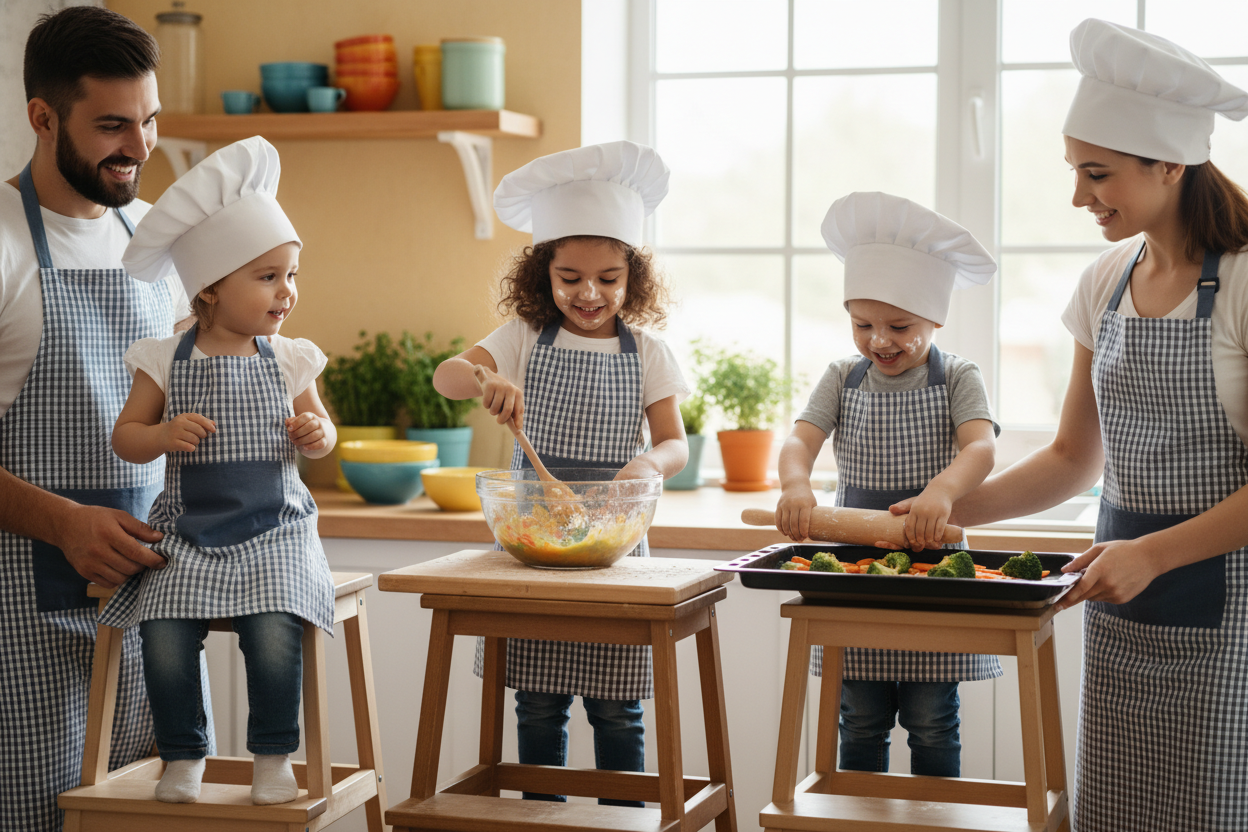
“I want to do it too!” Who hasn’t heard that enthusiastic little voice in front of a work surface? Imitating adults in the kitchen is a natural impulse for your child.
By doing “like the grown-ups”, he or she learns, grows and develops a host of essential skills… all while sharing precious moments with you.
Imitation, the natural engine of learning.
From a very young age, your child learns first by watching and then by imitating. Observing, copying, adapting… that's how we develop.
Cooking with parents allows children to understand the techniques, listen to explanations, and experiment in a safe environment. Imitation is much more than just a game: it's the first step towards independence.
Example :
- Child: “How do you cut the apple like that?”
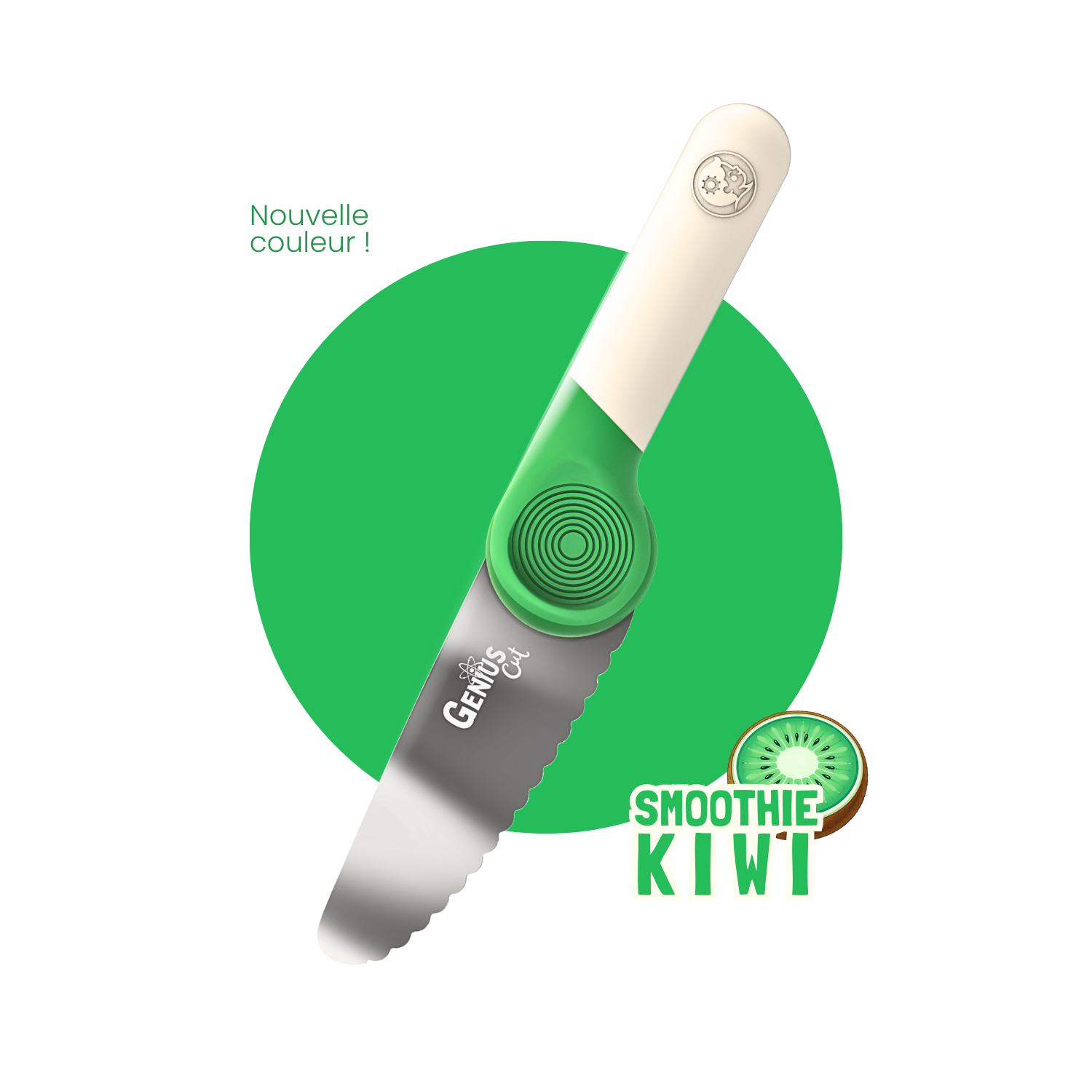
- Parent: “Look, I'm gently pressing with the Genius Cut®, then I'm pulling. Try it with me!”
-
Child: “It works! I’ll do it like you!”
Skills that are developed through imitation in the kitchen.
-
Creativity: The child adapts, invents, finds solutions: “What if we made a rainbow salad?”, “I want to put the strawberries on top, like a sun!”
-
Working memory: To follow several instructions (“Cut the apples, then add the bananas and mix gently…”), he must remember and link the actions together.
-
Reasoning: He asks himself questions, seeks to understand:
“Why do we put the dough in the oven?”, “How do you know when it’s cooked?”
Dialogue:
Child: “Why do we have to wait for it to cool down?”
Parent: “Because otherwise it’s too hot to eat… Do you want to touch it with your finger to smell it?”
Child: “Oh yes, it’s still hot!”
-
Self-confidence: Taking the plunge, trying, seeing yourself succeed (“You managed to peel the apple all by yourself, well done!”): with each attempt, your child gains confidence and pride.
How to encourage imitation safely?
-
Demonstrate the action : Take the time to do it slowly, explaining each step aloud.
-
Use appropriate tools : The Genius Cut® or the Archi Autonomy Kit are designed to allow your child to imitate safely.
-
Leave room for initiative : Make suggestions, but also let the child invent, propose a variation or correct a gesture.
-
Encourage experimentation, even imperfect experimentation : Value the process, not just the result.
Dialogue:
Child: “I put too much banana in, is that a problem?”
Parent: “No, let’s taste it together! Maybe we’ve invented a new recipe?”
The role of the parent: guide, role model, play partner.
In the kitchen, you are much more than just a supervising adult. You demonstrate, explain, encourage, and above all… you share. Your child feels confident enough to try, ask questions, and invent in turn.
The more you value their initiatives, the more they gain confidence and autonomy.
- Team up: prepare a recipe together, assign roles (“You wash, I cut, then we switch”).
- Put into words what you are doing and what the child is doing (“You are holding the apple well, well done!”).
- Laugh, improvise, celebrate successes and put “failures” into perspective together.
Conclusion: imitation leads to better growth.
Imitating the greats in the kitchen is much more than a game. It's learning through experience, strengthening self-confidence, memory, reasoning and creativity… all while creating shared memories.
With the right tools and plenty of encouragement, your child develops their talents… and their joy of doing “like the grown-ups”.
To accompany all these discoveries, find our educational tools (Genius Cut®, Archi Autonomie Kit…) on Les Petits Architectes.





0 comments